


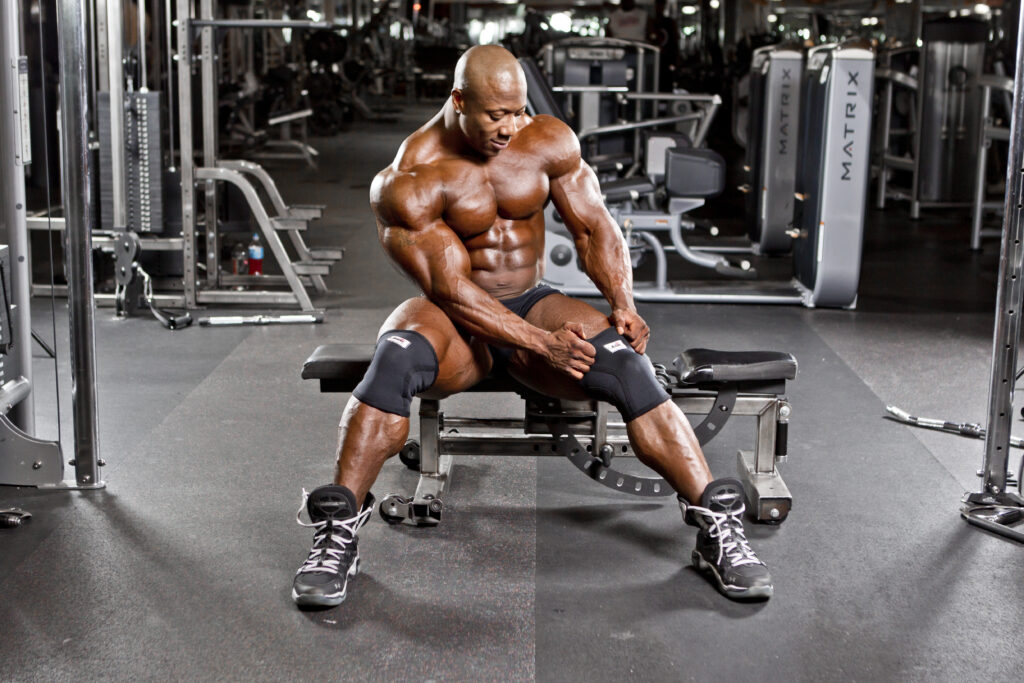
Somewhere in every lifter’s development, a moment arrives where the knees start talking back. Not injury — just noise. A faint ache on the third heavy set of squats. A moment of hesitation at the bottom of a deep lunge. Nothing dramatic. But enough to make you wonder whether the joint doing all that work deserves more than bare skin against a barbell’s worth of downward force.
Knee sleeves are the answer most lifters reach for eventually. But reaching for them and understanding why they work are different things. That gap matters, especially if you’re training somewhere that turns every session into a fight against your own core temperature.
The Joint Is Not Just Cartilage — It’s a Sensor
Start with what the knee actually is, mechanically. It’s not simply a hinge. It’s a densely wired sensory structure. Mechanoreceptors pack the joint, constantly reporting angle, load, and velocity back to the central nervous system. This feedback loop — proprioception — lets you squat to depth without looking down. It lets you catch a slight shift in knee tracking before it becomes a valgus collapse under 140 kilos.
Compression changes that feedback loop measurably. Neoprene wrapped snugly around the joint doesn’t just add warmth. It increases cutaneous pressure across a dense field of skin receptors. This sharpens the signal your brain receives about where the knee actually is in space. Research on compression garments has repeatedly found improved joint position sense under compressed conditions. This effect is strongest as fatigue accumulates and that sense naturally degrades. This is the actual mechanism, not a marketing gloss on “support.” The sleeve doesn’t hold your knee together. It makes your nervous system better informed about what your knee is doing.
The Load Question — And Why the Honest Answer Isn’t Simple
Ask whether knee sleeves increase your squat, and you’ll find a research record that refuses a clean yes. Some studies report measurable increases in one-rep max squat performance with neoprene sleeves. This effect plausibly ties to elastic rebound at the bottom of the movement — comparable to a compressed spring releasing stored energy on the way up. Other controlled trials find no significant change in load lifted or knee kinematics. However, they still confirm that lifters report meaningfully less discomfort and more confidence under the bar.
Read both bodies of evidence together, and a coherent picture emerges. Sleeves are not a strength multiplier. What they reliably deliver is psychological and neuromuscular stability — the sense that the joint is locked in, supported, and not the variable you need to think about mid-set. For anyone who has ever missed a lift not because of strength but because of a flicker of doubt at the sticking point, that difference is not trivial. Confidence under load is a performance variable, even when it doesn’t show up cleanly in a biomechanics lab.
Who the Research Actually Points To
Not every lifter needs sleeves for every session. Pretending otherwise would be dishonest. The evidence is most convincing for specific populations:
Athletes training above 80% of their one-rep max regularly. This is where joint stress accumulates fastest. It’s where the proprioceptive and thermal benefits of compression have the most work to do.
Lifters managing existing knee discomfort. Compression measurably reduces perceived pain during loaded movement. This changes the entire quality of a training session — not by masking a serious injury, but by making otherwise-manageable discomfort genuinely manageable.
Athletes stacking multiple loaded movement patterns in one session. CrossFit programming, Olympic lifting complexes, and competition-style powerlifting sessions ask the knee to stabilize across squats, cleans, box jumps, and lunges within the same hour. Each pattern loads the joint differently. A sleeve that stays exactly where it’s set through all of them earns its place.
Thickness Is Not a Vanity Metric
The 4mm-versus-5mm decision isn’t about who can handle more compression. It’s about matching material to demand. Thinner 4mm neoprene delivers genuine proprioceptive and thermal benefit. It stays wearable for extended periods. This makes it the correct choice for general strength work, moderate squat volume, and athletes who want consistent joint feedback without the sleeve becoming its own obstacle.
Thicker 5mm construction is the standard across competitive powerlifting and CrossFit. It delivers materially more compression for maximum-effort work, without sacrificing the range of motion those sports demand.
Get this wrong in either direction, and the sleeve stops helping. Too thin under maximal load, and support disappears exactly when you need it most. Too thick for a long endurance-style session, and the sleeve becomes a heat trap you’re fighting instead of training with. This brings up the variable most knee sleeve research quietly ignores: climate.
The Variable the Studies Don’t Account For
Almost every study on knee sleeve performance happens in a temperature-controlled lab, somewhere between 18°C and 22°C. That’s not the environment most of the world actually trains in. It’s certainly not Bangkok, Phuket, or a non-air-conditioned gym anywhere in Thailand, where ambient training temperatures regularly sit above 30°C with humidity frequently exceeding 70%.
This matters more than it sounds like it should. Standard solid neoprene is functionally airtight against the skin. In a cool gym, that’s irrelevant. In Thailand’s climate, it becomes the dominant variable in the entire equipment decision. A sleeve that traps heat against an already-overheating limb doesn’t just feel unpleasant. It actively degrades the exact proprioceptive benefit the sleeve exists to provide. Once skin temperature and sweat accumulation cross a certain threshold, athletes reflexively start focusing on equipment discomfort rather than lift mechanics — the precise failure mode compression is supposed to prevent.
This is the case for perforated construction, not as a comfort feature but as a performance requirement specific to tropical training conditions. Schiek’s Model 1150KS uses 4mm perforated neoprene engineered with ventilation channels. These let heat and moisture actively escape during the set, rather than accumulate against the skin. The compression and proprioceptive function stay fully intact — the material still delivers the mechanoreceptor feedback described earlier. But the heat-trap problem that makes standard sleeves genuinely difficult to wear through a full session in Thailand’s climate is structurally addressed, rather than simply tolerated.
For athletes who need the higher 5mm compression standard — CrossFit, Olympic lifting, competitive powerlifting — Schiek’s Model 1170CF applies the same logic at greater thickness. Reinforced seams and an extended cut hold position through multi-movement sessions without requiring readjustment between exercises. The engineering brief is identical in both models: deliver the compression the research actually supports, without asking an athlete training in genuinely demanding heat to choose between joint support and staying wearable through the session.
Where This Leaves You
Knee sleeves are not magic. Any brand telling you otherwise is selling you something the research doesn’t back. What they are is a well-evidenced tool for sharpening joint awareness, reducing discomfort under repeated heavy loading, and giving serious lifters one less variable to manage mid-set. That’s a real, measurable benefit — just not a dramatic one. It doesn’t show up the same way for every athlete or every session.
For those training seriously in a climate that makes standard equipment genuinely harder to use, the material a sleeve is built from matters as much as the compression rating on the label. The right sleeve should disappear into your training, not become something you’re managing alongside it.
This article discusses general fitness equipment and training considerations and is not medical advice. If you are managing an existing knee injury, consult a qualified healthcare professional before beginning or modifying your training.
In Move — official Schiek distributor in Thailand. Fast delivery nationwide at inmoveth.com